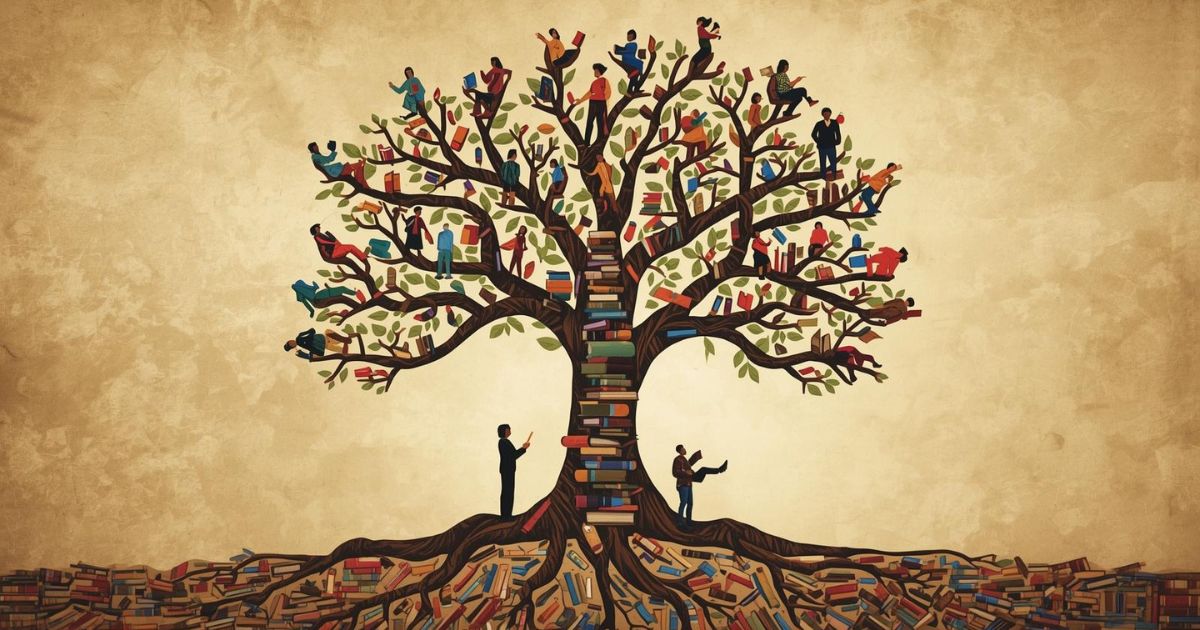
Every asset you own faces the same relentless forces. Markets fluctuate. Real estate cycles. Businesses get disrupted. Even cash quietly erodes. But there’s one asset class that behaves differently, one that doesn’t dilute when shared, doesn’t depreciate over time, and actually grows stronger each time it’s passed down. That asset is story, and actively sharing family narratives is essential because it helps preserve the legacy across generations. In the middle of the most significant wealth transfer in human history, this shared purpose and narrative are becoming a quiet dividing line between families and foundations that endure and those that don’t.

The Real Risk in the Great Wealth Transfer
Over the coming decades, analysts expect tens of trillions of dollars to move from older generations to their heirs one of the most significant wealth transfers in recorded history.
In the United States alone, estimates project that around $30 trillion will pass from Baby Boomers to Generation X and Millennials in relatively short order.
Advisors, family offices, and institutions are busy preparing:
- Designing trusts and legal entities
- Refining tax strategies and governance
- Building reporting, dashboards, and investment policies
Yet history is blunt.
Studies often cited in the family-wealth world suggest that roughly 70% of affluent families lose their wealth by the second generation and about 90% by the third—the reality captured in the proverb “shirtsleeves to shirtsleeves in three generations.”
Family-business research reaches similar conclusions: only about 30% of family businesses survive into the second generation, around 12% into the third, and only a small percentage make it to the fourth.
If structures and strategies alone were sufficient, those numbers would look very different.

“Shirtsleeves to Shirtsleeves”: A Global Warning
The idea that wealth rarely survives beyond the grandchildren isn’t new and isn’t uniquely American.
The English proverb “from shirtsleeves to shirtsleeves in three generations” has cousins across cultures:
- In England and Scotland, older sayings described going “from clogs to clogs” within three generations
- In Italy, variations speak of going “from stalls to stars and back to stalls.”
- In China, a similar proverb often translated as “wealth never survives three generations” expresses the same pattern
- In Japan: “The third generation ruins the house.”
What all of these share isn’t precise measurement but observation:
- First generation builds from scarcity
- Second generation grows and stabilizes
- Third-generation inheritors inherit comfort, but often without the same clarity of purpose, discipline, or shared story.
Modern commentary sometimes challenges the exact percentages behind the “70/90%” claims, noting that the data can be imperfect or oversimplified.
However, even critical analyses acknowledge a persistent pattern of attrition and conflict, especially when families neglect communication, education, and narrative, such as sharing family origins or values.
The proverb endures not because it’s mathematically perfect but because it captures a psychological and cultural reality.

Why Most Generational Wealth Transfer Fails
Research examining multiple wealthy families shows that the primary reasons fortunes disappear aren’t markets or tax codes.
A commonly cited breakdown from advisor literature, based on work by Williams and Preisser, attributes failures roughly as follows:
- About 60% of wealth transfer failures stem from breakdowns in communication and trust
- Around 25% fail because heirs are unprepared for responsibility
- Only about 15% are blamed on technical issues like poor tax planning, investment performance, or documents
In other words, 85% of the failure points are human.
They’re failures of understanding, relationship, and narrative, not spreadsheets.
Advisor and family-business writing surfaces the same themes:
- Families avoid talking about values, tradeoffs, and expectations
- Founders over-focus on control and under-invest in preparing successors
- Heirs receive assets without a clear sense of what they’re for, or how they were built
Wealth, on its own, can’t teach judgment. That work belongs to the story.

Historical Case Studies: How It Actually Plays Out
When the Story Fails: Yeo’s and Gucci
The pattern is easiest to see not in aggregate statistics but in individual families whose names became global and then slipped from family hands.
Yeo Hiap Seng (Yeo’s)
The Singaporean beverage company Yeo Hiap Seng grew from a small family venture into a listed regional brand. Over time, conflicts within the founding family over control, properties, and strategy led to public legal disputes and boardroom battles.
The turmoil weakened the family’s position and reputation. A rival family ultimately acquired control of the company, leaving descendants with fractured relationships and diminished influence.
The fashion house founded by Guccio Gucci became a symbol of Italian luxury. Still, by the third generation, the family was consumed by infighting, lawsuits, and competing claims to control the business.
Successive disputes, governance failures, and misalignment ultimately led to the loss of family control, even as the Gucci brand itself continued under corporate ownership.
In both stories, the problem wasn’t a lack of financial assets or brand strength. It was a lack of shared story and coherent governance, no agreed narrative about what the family was trying to do, how power should move, and what principles should guide decisions.
When the Story Holds: Multi-Century Family Businesses
On the other side of the ledger, research into some of the world’s oldest family companies that have operated for centuries shows a different pattern.
Examples include:
- European winemakers and merchants dating back to the 1300s and 1600s
- Japanese hospitality and beverage companies were founded hundreds of years ago
- Long-standing family manufacturers and service firms that have persisted across wars, political changes, and economic shocks
Studies of these firms consistently highlight certain behaviors:
- A strong, explicit sense of shared purpose and identity
- Rituals, meetings, and education programs that retell and reinterpret the founder story for each generation
- Governance structures that reflect and reinforce those stories, not just financial targets
The throughline is that story, values, and governance are treated as assets in their own right, renewed deliberately every generation to ensure continuity and resilience.

Story as Humanity’s Oldest Continuity Technology
Long before there were trusts, tax codes, or balance sheets, families relied on oral tradition to transmit identity, rules, and memory.
Genealogies, origin myths, and rituals were how communities remembered who they were and what they owed one another.
Modern research on family storytelling reaches strikingly similar conclusions:
- Telling and retelling family stories helps younger generations develop resilience, identity, and emotional connection
- Projects that record elders’ stories through interviews, writing, or film improve intergenerational understanding and reduce regret, especially near the end of life
In the digital age, tools for preserving stories have changed video, audio, and interactive archives, but the underlying function is the same: help people remember what happened, why it mattered, and what it cost.
For families facing complex wealth transfer planning, this isn’t nostalgia. It’s infrastructure.
Story as Off-Balance-Sheet Capital
Advisors increasingly talk about “non-financial capital,” the shared values, education, and narrative that shape whether money actually becomes lasting wealth.
In that frame, the story operates like off-balance-sheet capital:
- It reduces conflict by making expectations, boundaries, and history explicit instead of leaving everyone to guess
- It improves governance because board members, trustees, and successors can test decisions against a known purpose and founding narrative, not just a performance target.
- It prepares heirs not just technically (with classes and briefings), but emotionally and morally, by showing them what previous generations sacrificed and why
Research on multigenerational families and family offices repeatedly notes that when a straightforward narrative about identity and purpose is present, the odds of coherent continuity rise even when fortunes change.
A story can’t guarantee financial outcomes. But it dramatically alters how families respond to pressure, conflict, and opportunity.
Myth vs. Reality: Is the “Third-Generation Curse” Even Real?
Some analysts argue that the “70% by G2, 90% by G3” statistics are more myth than science, pointing out that the underlying data is often thin or based on small samples.
Articles from significant investment and advisory organizations now caution that the third-generation curse should be treated as a warning metaphor rather than a fixed law of nature.
However, even critical voices make two key concessions:
- Significant attrition of wealth over generations is common, especially when families grow faster than assets or lack structure
- When families and businesses do last, they almost always combine solid financial planning with ongoing communication, education, and storytelling.
The real question for any founder or family office isn’t whether the proverb is numerically perfect.
It’s whether the family is building the capacities that exceptions share: governance, preparation, and story.

How Story Actually Changes Generational Wealth Transfer Outcomes
Advisory and family-business literature, as well as case-based practitioners, point to specific mechanisms by which story shifts intergenerational wealth transfer outcomes.
When a family’s story is captured and actively used:
Decision-making improves: Successors can ask, “What would the founding generation have prioritized?” in concrete, not imaginary terms.
Disagreements de-escalate: Conflict still happens, but arguments are grounded in shared values and history rather than pure emotion or entitlement.
Transitions feel intentional: Leadership and ownership changes can be narrated as chapters in an ongoing story, rather than abrupt breaks.
Without a story, even good planning can feel arbitrary or opaque. With a story, the same plan becomes legible across generations.
What We See at Dickens Brothers
When families, founders, and foundations finally decide to capture their story, often decades later than they intended, something predictable tends to happen.
Once the cameras, lights, and questions draw out the real history, the room shifts.
In practice, when story work is done well:
- Conversations between generations deepen; questions move from “What do I get?” to “What are we actually trying to do?”
- Advisors and boards find it easier to guide because they have language for purpose and tradeoffs, not just numbers.
- Successors feel less like “inheritors” and more like stewards of a long, complicated effort.
This is why legacy documentaries and structured story work aren’t just “nice to have” add-ons. They’re how families create the narrative capital that makes their wealth transfer planning intelligible fifty or a hundred years from now.
How to Start Compounding a Story in Your Family or Foundation
Story doesn’t compound automatically. Like capital, it needs deliberate reinvestment.
For families, family offices, and foundations, practical steps often include:
1. Conduct Structured Founder Interviews
Capture originators while they’re still alive and able to speak to their motives, fears, and tradeoffs.
2. Create a Shared Narrative Document or Film
Blend history, values, and critical decisions into something heirs will actually consume.
3. Embed Story into Governance
- Open meetings with a brief historical reflection
- Include narrative in investment or grant-making policies
- Use story in next-gen education programs
The families and institutions that break the “shirtsleeves” pattern aren’t just lucky. They treat the story as an asset class.
For Founders, Families, and Foundations Who Want to Endure
In the long arc of generations, almost everything that feels solid now will change: laws, markets, industries, technologies, even last names.
What endures, when continuity works, is a shared sense of who we are, what we built, and why it was worth the effort.
Capital can be inherited. Understanding has to be cultivated.
In an era defined by unprecedented generational wealth transfer, the story is the one asset that reliably compounds because it grows stronger every time it’s told, tested, and passed on.
If you’re approaching a transition and wondering whether your family’s story is positioned to compound or quietly erode, we’d welcome a conversation.