
He started with $50 and a sewing machine in a cramped apartment.
Forty years later, his company employed thousands. His children inherited a fortune.
But they never inherited the nights he slept on factory floors. The partners who betrayed him. The moment he nearly lost everything, and the principle that stopped him from cutting corners when it would have saved the business.
Within a generation, the company was sold.
Not because the heirs were careless. But because they never understood why it was built the way it was.
Recognize that while founders build companies, it is the stories they leave behind that truly create a lasting legacy and continuity.
The Lesson History Keeps Teaching Us
Throughout history, some of the most powerful empires and enterprises have crumbled not from external conquest but from the quiet erosion of founding intent.

The Medici Bank (1397–1494)
The Medici family didn’t just build a bank; they built Renaissance Florence.
Giovanni di Bicci de’ Medici founded the institution with a specific philosophy: strategic generosity, calculated risk, and the understanding that reputation was worth more than any single transaction.
His son Cosimo understood this. He’d watched his father navigate papal politics and Florentine rivalries. He knew why certain alliances mattered, why certain debts were forgiven. Why the family funded artists and architects.
But by the time Lorenzo the Magnificent’s heirs took control, the how was preserved: the ledgers, the branches, the processes. But the why had faded, reminding us of the importance of understanding the founder’s intent.
Decisions became reactive rather than strategic. The bank collapsed within decades.
The Medici institutionalized what they built. They failed to preserve the how and why of how they built it.
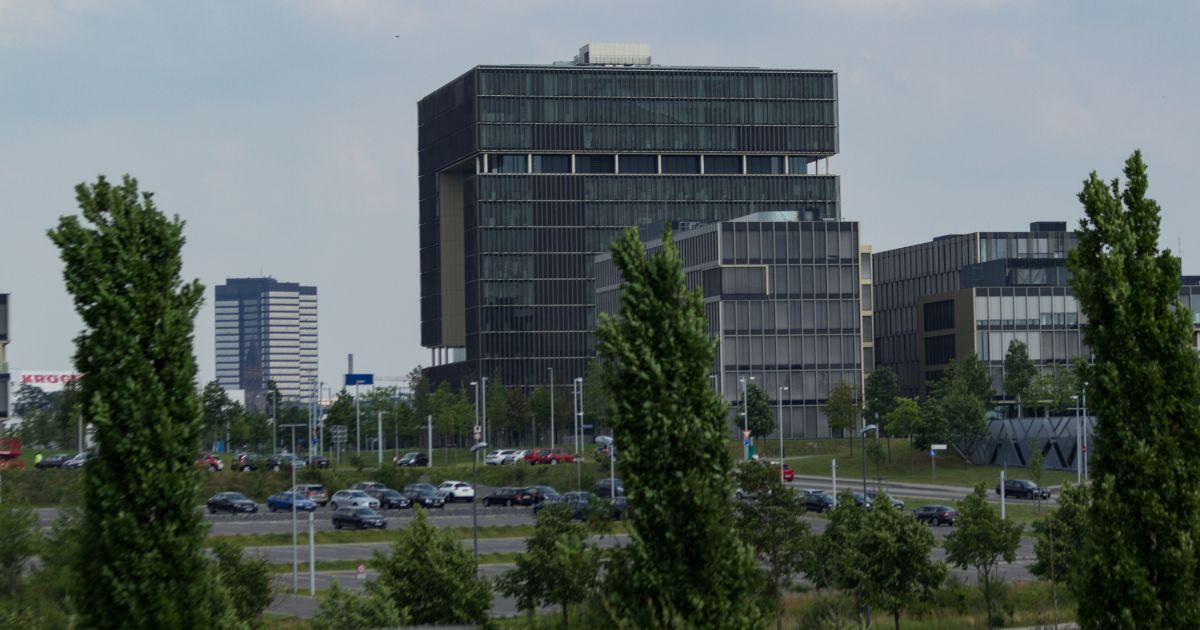
The House of Krupp (1811–1999)
For nearly two centuries, the Krupp family dominated German steel and armaments.
Alfred Krupp didn’t just build factories; he built a philosophy. He created worker housing, hospitals, and pensions decades before such things were commonplace. He believed the company and its workers were a single organism.
This wasn’t charity. It was a strategy.
Alfred understood that loyalty, cultivated through genuine care, created a workforce that would outperform any competitor.
His descendants inherited the factories. Some inherited the philosophy. Others saw only the financial statements.
The company survived World Wars I and II and near-bankruptcy. But when Friedrich Krupp shared his personal struggles, his specific vision was no longer understood by leadership, and the family eventually stepped back.
Today, ThyssenKrupp is a public company. The founding family’s involvement is a memory.
The Rothschild Dynasty (1760s–Present)
Here’s a counter-example: a family that understood story as infrastructure.
Mayer Amschel Rothschild, working from the Frankfurt ghetto, built a financial network by placing his five sons in five European capitals.
But he didn’t just give them capital and connections. He gave them principles:
“Concordia, Integritas, Industria” Harmony, Integrity, Industry.
More importantly, he gave them stories. Stories of persecution survived. Stories of trust betrayed and trust honored, stories of why the family must remain unified even when geography separates them.
The Rothschilds formalized these stories. Family letters were preserved. Decisions were documented with their reasoning, giving the family confidence that their core principles remain intact across generations.
The result? The Rothschild family remains influential more than 250 years later, not because they were the wealthiest (others surpassed them) but because their story survived.
The Founder’s Blind Spot
Founders are exceptional builders.
They solve problems. They take risks. They make decisions under pressure with incomplete information.
But in the act of building, many founders unknowingly leave a gap.
They institutionalize what they built without preserving how and why they built it.
The result is painfully familiar:
- Companies that succeed financially but lose cultural clarity
- Families that inherit ownership without understanding the origin
- Foundations that fund outcomes but drift from intent
The founder’s work is preserved. The founder’s thinking is not.
Consider Henry Ford.
Ford didn’t just build cars, he revolutionized manufacturing and reshaped American society. His $5 workday wasn’t generosity; it was a calculated move to reduce turnover and create customers who could afford his products.
But Ford also held views about control, about hierarchy, about who deserved success that were deeply personal, forged through specific experiences.
After his death, the company struggled for decades with questions he had answered instinctively: How do we balance efficiency with innovation? When do we control and when do we delegate? What risks are worth taking?
His assembly line was preserved. His judgment was not.

Why Companies Outlive Founders but Continuity Doesn’t
Businesses are designed to scale. Continuity is not.
Operating systems, governance structures, and leadership teams can carry a company forward. But they’re ill-equipped to transmit:
- Judgment forged through adversity
- Values tested under fundamental constraints
- Tradeoffs that shaped the original mission
Over time, decisions become optimized but untethered.
What’s lost isn’t competence. It’s context.
And without context, alignment erodes quietly.
The Cadbury Example
The Cadbury family built their chocolate empire on Quaker principles. They created Bournville, a model village for workers with no pubs (the Quakers opposed alcohol), with gardens, education, and healthcare.
This wasn’t Victorian paternalism. It was a specific philosophy: business exists to serve all stakeholders, and worker wellbeing creates better products and stronger communities.
For generations, this story was told and retold. Cadbury executives understood they weren’t just making chocolate, they were embodying a vision of ethical capitalism.
But as the company grew and leadership became professional rather than familial, the story faded into brand heritage rather than an operating principle.
In 2010, Kraft acquired Cadbury.
Within months, a factory Kraft had promised to keep open was closed. The uproar was immense, but the decision-makers didn’t understand why.
To them, it was a business optimization.
The Cadbury heirs understood. The Kraft executives, inheriting a company without its story, did not.

The Difference Between Culture and Continuity
Culture governs behavior today. Continuity governs decision-making over time.
Culture can be taught through onboarding, policies, and incentives.
Continuity requires understanding:
- Why specific lines were never crossed
- Why growth was pursued, or resisted
- Why were some opportunities rejected despite financial upside
Those answers rarely exist in handbooks. They live in a story.
The Hermès Difference
Thierry Hermès started as a harness-maker in 1837. Six generations later, Hermès remains family-controlled, resisting acquisitions by luxury conglomerates worth billions.
How?
The family doesn’t just pass down ownership. They pass down the story of why craftsmanship matters.
New family members work in ateliers. They learn that a single bag takes 18 hours to make, and they know why that matters.
When LVMH attempted a hostile takeover in 2010, the family’s response was unified and fierce. Not because of financial calculation but because of the story: This is who we are. This is what Thierry built. This is why it matters.
Fifty family members formed a holding company, locking their shares away. The takeover failed.
That’s the power of story as an operating system.
Story Is the Founder’s Longest-Lasting Asset
Story carries what balance sheets cannot.
It preserves:
- The origin of conviction
- The cost of decisions that shaped the enterprise
- The values that mattered when shortcuts were available
For families and foundations connected to founder-built companies, story functions as an intergenerational operating system.
It allows future leaders to:
- Interpret intent without guessing
- Adapt without abandoning purpose
- Lead faithfully without copying the past
A story doesn’t freeze a founder in time. It gives future generations the context to move forward responsibly.
The Walmart Question
Sam Walton built Walmart on specific principles: relentless cost control, small-town values, and servant leadership. He drove an old pickup truck and flew coach.
He wrote these principles down. He told stories at Saturday morning meetings. He made his philosophy explicit.
But Sam Walton is gone.
The company faces decisions he never imagined about e-commerce, about labor practices, about global supply chains.
The question isn’t “What would Sam do?” That’s imitation.
The question is “What principles guided Sam, and how do they apply here?” That’s an interpretation.
The difference depends entirely on whether the story survived or just the rules.
What We See at Dickens Brothers
Working with founders, families, and foundations, we see a consistent distinction.
When Story Is Absent:
- Success continues, but direction weakens
- Conflict becomes personal rather than principled
- Decisions default to efficiency instead of meaning
When Story Is Present:
- Alignment increases across generations
- Leadership transitions feel grounded rather than disruptive
- The founder’s influence persists without control
The story doesn’t preserve ego. It preserves orientation.
Founders Don’t Need to Be Remembered, They Need to Be Understood
Many founders hesitate to capture their story.
Not out of apathy but humility.
They assume the work speaks for itself.
But work without context invites misinterpretation.
Understanding is what allows:
- Children to inherit responsibility, not just ownership
- Executives to steward culture rather than reinvent it
- Foundations to act with clarity rather than compliance
The goal isn’t remembrance. It’s continuity.
The Estée Lauder Principle
Estée Lauder built her cosmetics empire on a simple practice: the personal touch. She gave free samples. She touched customers’ faces. She believed luxury was about relationship, not transaction.
Her descendants didn’t just inherit the company. They inherited the story of why that personal touch mattered, how it differentiated the brand, how it built loyalty no advertising could match.
Today, even at a global scale, that story guides decisions. It’s why Estée Lauder Companies still emphasizes in-store experiences when competitors move entirely online.
The founder is gone. Her understanding remains.
A Question for Founders and Families
If your company survives but your story doesn’t, what guides the next generation?
What explains:
- Why this business exists at all
- Why were specific values non-negotiable
- Why was success defined the way it was
Because founders build companies. But stories build what lasts.
The Untold Stories That Shaped Empires
History is filled with overlooked narratives and stories that shaped the world but rarely made it into textbooks. The same is true in business.
Behind every enduring enterprise is a story that wasn’t told loudly but was passed down carefully:
- The crisis that almost ended everything
- The partner who betrayed, and what was learned
- The opportunity was rejected because it violated core principles
- The moment the founder chose integrity over profit
These stories don’t appear in annual reports. They live in memory until memory fades.
The question is whether they’re captured before that happens.
Historical Patterns: What Endures vs. What Fades
| Enterprise | What Happened | Why |
| Medici Bank | Collapsed within decades of the founder’s death | How was it preserved, but why did it fade? |
| House of Krupp | Family stepped back; now a public company | Philosophy lost when the story wasn’t understood |
| Rothschild Dynasty | Still influential after 250+ years | The story was formalized and deliberately passed down |
| Cadbury | Sold to Kraft; factory promises broken | Story became heritage, not an operating principle |
| Hermès | Resisted billion-dollar takeovers | Story preserved as an operating system |
Closing Thought
Continuity isn’t automatic. It’s constructed deliberately.
Not through structures alone but through understanding.
And understanding moves through story.
The Medicis lost their bank because the story faded. The Rothschilds kept their legacy because the story was preserved. Cadbury was sold because the new owners didn’t understand what they’d bought. Hermès remained independent because the family knew exactly who they were.
Your company, your family, your foundation, they face the same choice.
Build the structures. Preserve the story. Or watch continuity quietly erode.
At Dickens Brothers, we help founders and families capture the stories that matter before they’re lost to time, because companies can be built in a generation. But what lasts? That requires a different kind of architecture.